


Zeal Dried Venison Puffs 85g
Guaranteed safe payment

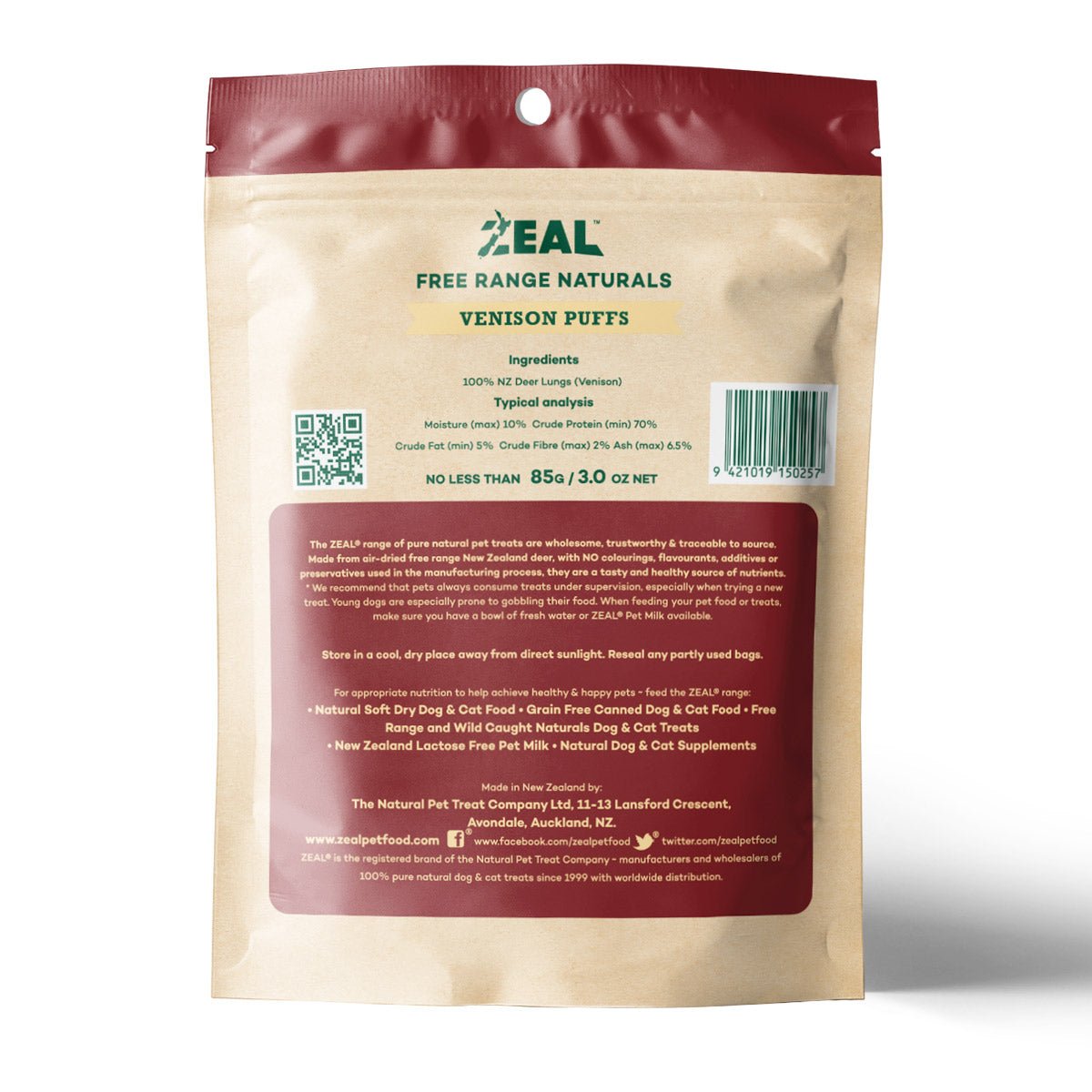
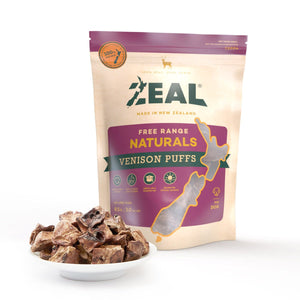
Easily digestible rewards, delicious with a wonderful aroma. Great when crushed and sprinkled over Food!
- Gluten-free • Low allergen
- High in protein • Low in fat
- Source of animal protein: Venison from free-range farms
- Made in New Zealand
Recommended for: Cats and dogs of all life stages
No vaccines, no steroids (HGP), no colorants, no preservatives, no additives
ZEAL® 100% pure natural rewards are nutritious, reliable, and traceable. We offer 21 types of delicious rewards to choose from, 6 of which are also loved by cats. Our rewards are handcrafted in our Auckland factory from free-range New Zealand meats and wild-caught seafood. No colorants, flavors, additives, or preservatives are used in the manufacturing process. Treat your pet to a delicious and healthy source of nutrients.
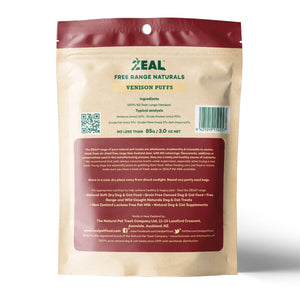
Ingredients and Analysis
Benefits
Oral and dental health for pets is extremely important. They are unable to tell us when they are in pain, so regularly checking their gums and teeth is important. Chewing Zeal® rewards will help remove plaque and tartar. It's also good to regularly brush your animal's teeth!
Rewards for use in training sessions: Rewards are a useful tool in the training process as they help keep your pet focused on you and the learning process, regardless of their age. For training purposes, rewards should be small and easy to swallow, requiring little chewing so you can reward behaviors quickly and frequently. Ideal training rewards are relatively soft and pea-sized. Pets don't care much about the size of the reward, but about the quantity that impresses them. Larger rewards are more suitable for rewarding good behavior, like large pieces, where your pet has to stop, chew, and take time to eat them.
How to use dog rewards effectively: The most effective way to use rewards is to reinforce a calm and submissive state. Do not use rewards as a reward for an excited or overly stimulated state of mind. Let your pet smell the reward first, but lift it away from them and wait. Remember that pets, especially dogs, can smell from more than 5 meters away, so you don't have to place the reward under their nose. Once they smell it, dogs may initially jump, and even jump on you. If this happens, indicate your disapproval through your behavior and body language, as your patience as an owner will pay off in having a well-mannered pet. They will understand that a calm and relaxed approach leads to results, as they sit and wait while looking at you in quiet anticipation. At the moment of calm, offer them the reward. Do not use rewards to reinforce an overly enthusiastic pet, but to command them to remain in a calm and submissive state.
What types of rewards are suitable for your dog's or cat's breed, size, and age?
We recommend that your pet consumes rewards under supervision, especially when trying a new reward. Many dogs tend to want to swallow the reward without even chewing it, so monitor all sizes and ages to ensure they can handle it without choking incidents. Cats generally tend to nibble the reward without trying to consume it in seconds. Small dogs by nature may find leg bones, etc., a bit large, and large dogs may try to swallow medium-sized hard rewards without chewing, while older pets with dental Disorders need softer chewing, so it depends on your pet's size and eating behaviors.
Feeding Guidelines
Do not overindulge in rewards ~ Although it may be tempting when your beloved pet begs for more, do not be too generous and keep rewards organized. Rewards should complement your animal's diet. As with us, consuming too many rewards can lead to weight gain and may also affect the balance of your animal's diet, which should be complete and balanced to maintain their health. Ideally, rewards should not exceed 10% of the daily required calories for your pet, so reduce regular meal portions to avoid weight gain, considering what they consumed from rewards during training sessions in the day. This also applies to rewards given as general rewards for good behavior. If you do not, your pet will slowly gain weight, and excess weight beyond the ideal is bad for your pet's health.
When offering rewards ~ We always recommend that your pet consumes rewards under supervision, especially when trying a new reward. Some dogs (unusual for cats) are extremely excited when it comes to tasty pieces and may not chew properly, leading to a potential choking hazard.
When to offer rewards to your pet ~ Between meals is the ideal time to offer rewards, not directly before or after a meal. Choose a reward your pet will enjoy. If you are using rewards as a training tool, your reward will not work well after your pet has had a full meal.
Storage: Store in a cool, dry place away from direct sunlight. Keep the product in sealed bags to maintain freshness. If you buy large bags, keep the unused product in an airtight container to maintain freshness and cleanliness.